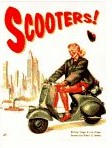
At the age of 12 Bruno Rossati began working eleven hour days.
"Now, approaching 91, I find myself reminiscing about my youth, still riding my motorcycle every day.
Letter re Ladetto
How Italy Organises the Sport
By COUNT LURANI, in "Motor Cycling."
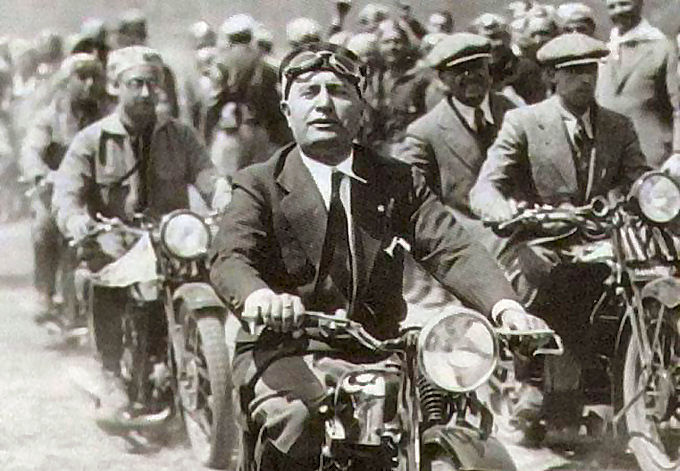
RECENTLY Mr. Alex. W. Finlay gave some interesting sidelights on motor cycling in Europe with special reference to conditions in Germany. Now, in the following article, we get an outline of how the sport is encouraged in Italy. Mussolini, himself, leader of the nation, sets an example by riding a motor cycle.
HOW motor cycling is ruled and just how much help it gets from the Fascist Government in Italy is undoubtedly a subject of interest to readers of Motor Cycling.
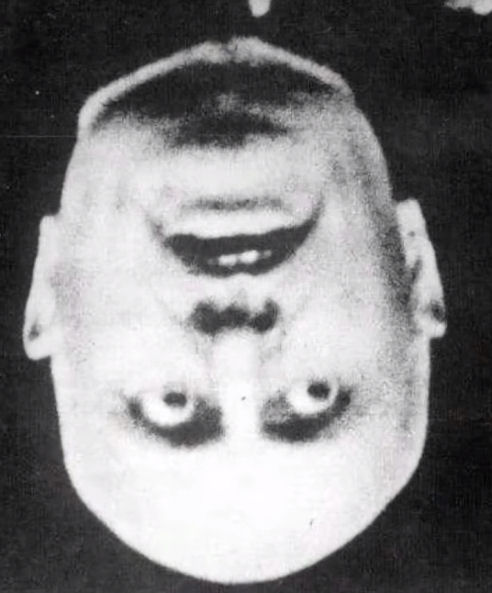
First of all, let me talk about the man who is called "Italy's first motor cyclist." That man is Benito Mussolini. Mussolini is a keen rider himself and looks upon the motor cycling movement with a great deal of sympathy. Not only has he introduced motor cycles into many army, police and militia corps, but he has warmly helped the motor cycling industry, the trade and the sporting world.
He has done away with riding licences altogether, thus making the movement immensely popular with the younger set. Some years ago, in an official letter to his representatives in the different towns of this country, when suggesting their duties and the means of transport for them to go about their jobs, he said it was "better by motor cycle." This phrase by Mussolini has become the "coat of arms" of Italian motor cycling.
Now let us look at the ruling of the sport in Italy. There is a very powerful central body in Rome called the C.O.N.I. (National Italian Olympic Committee). This powerful body is under the direct control of the Government and also financially depends upon it. The president of the body is now His Excellency A Starace, the popular Fascist Party Secretary of Italy. The secretary of the C.O.N.I. is General G. Vaccaro.
All the sports federations depend upon the C.O.N.I. That is to say, all sports have a federation in Italy; for instance, there is a winter sports federation, a swimming and water-polo federation, a light athletic sports federation, a tennis federation, a golf federation, and so on, and there is also, of course, the motor cycling federation, and that, in common with all the others, depends entirely upon the C.O.N.I.
The President of the Royal Italian Motor Cycling Federation is General U. Leonardi, who is also the commander of the road mounted militia, in which almost all the best racing riders have joined.
The motor cycling federation has, of course, technical and sporting committee and a special general committee. The federation rules all the motor cycling clubs throughout the country. Only one club is allowed in each town or village. This rule is insisted upon in order that there shall be no jealousy between members of dlfferent clubs in the same place, With only a single club in which all clubmen are bound to join they get the same facilities that are extended by all the other clubs throughout the country, there being no difference between large clubs and small clubs. For racing or competition in reliability trials one must be a member of a club and the only bodies allowed to stage or organise a sporting event in the country are the recognised clubs.
The presidents of the clubs are not elected by the members themselves, but are nominated by the central federation after a careful selection. In the same way club presidents can be changed at any moment by the central authorities. Similarly, the president of the motor cycling federation is nominated directly by the president of the C.O.N.I.
You will thus clearly understand . how motor cycling in this country as well as all other sports is strictly followed and ruled by the Government, the system preventing troubles of any kind creeping in, as well as killing inefficiency.
The sporting events that are approved after careful selection form the motor cycling calendar, and riders are divided into several categories, beginning with those who are considered "experts" and ending with what you would term "novices." There is an annual rider and marque championship in the 250 c.c., 350 c.c. and 600 c.c. classes.
To compete abroad, all riders must ask for a special permit from the federation, and only experienced riders on capable machines, with a reasonable chance of putting up a good show, are allowed to cross the frontier to ride for the Italian colours in foreign countries. Each official entry in foreign events is looked upon in Italy as a national affair, in which Italy's prestige is challenged
Mussolini has issued... [text missing] sport in official decoration that can be worn on uniforms as a military medal. Every year, on the first Sunday in July, there is a most imposing ceremony in Rome in the beautiful Piazza di Siena Stadium. At this ceremony Mussolini himself presents these medals.
A motor cyclist who wins an Italian championship or beats an Italian record receives a bronze medal; a rider who wins a European championship or breaks a European record gets a silver medal, while a rider who wins the world's championship or breaks a world's record or who secures a victory at the Olympic games gets a gold medal.
There is a tremendous amount of competition for these coveted awards and motor cyclists are well up in the list at the end of this year. The latest riders to get bronze medals will be Pagani, Rossetti and Berafini for their wins in the 250 c.c., 350 c.c. and 500 c.c. Italian championships, while Piero Taruffi will get a gold medal for his recent world's speed records. This decoration is one of the highest honours in Italy and is one of the greatest aims of every champion.
For the victims of the sport, to the families of those riders killed in motor cycling races, car races, Alpine climbs and other accidents, a silver medal is granted as a momento.[sic]
This short report of Italy's sports organisation generally and of the motor cycling organisation in particular, will show how the Fascist body has enormously helped the development of sport in Italy and how by ruling it seriously better results are obtained in all fields every day.
Australian Cycling & Motor Cycling Jan 26th, 1938. Trove NLA
The excellent series Mussolini: Son of the Century (IMDB 8.2/10) is described thus:
In 1921 a former member of parliament and mayor of his town, Marco Ciriani, voiced his opposition to the Mussolini regime. He was forced by Benito's thugs to drink a litre of castor oil (causing intense diarrhea), then held as he defecated on his parliamentary texts before being tied to the bonnet of a vehicle and paraded between villages of his own region, Upper Friuli.
There is a scene in Fellini's Amarcord that depicts the blackshirts force-feeding castor oil to a boy's father.
Both of these films are far too high-brow to attract the attention of Donnie Boy's blackshirts, so they'll probably stick to arresting five-year-olds and shooting mothers in the face.