
Manufactured : 1966-1974
Engine : 4-stroke, single-cylinder, air-cooled - bore x stroke 69 x 66 mm - total displacement 246.7 cc - compression ratio 10:1 - overhead camshaft with two valves in the cylinder head - wet sump with pump - Amal 376/27 carburettor - multi-disc clutch in oil bath - 5-speed gearbox - primary transmission by gears - secondary transmission by chain.
Chassis : tubular steel frame - Ceriani telescopic hydraulic front fork - swingarm rear suspension with 2 Betor hydraulic shock absorbers - Ø 200 mm TLS front brake - Ø 200 mm drum rear brake - tyres: 2.75 x 18" front - 2.75 x 18" rear.
Dimensions: wheelbase 1285 mm - dry weight 118 kg - fuel tank 14 litres.
Electrical system: The lighting is battery-powered, and the battery is recharged by a MOTOPLAT alternator via a rectifier.
Performance : 25 hp at 9000 rpm - maximum speed 160 km/h in normal position - range 310 km.
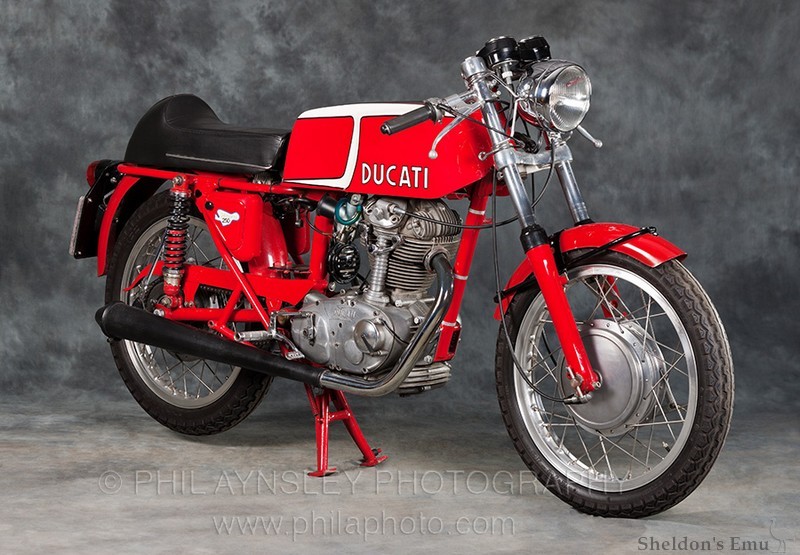
Colour scheme: metallic red paint for chassis, sidecovers, mudguards and tank, and black or chrome for the headlight.
Versions: Three versions of this model were manufactured, their main differences being: The first version had the headlight used on the earlier single-cam models, with the speedometer integrated into it, and a sight glass in the right-hand valve cover/timing shaft on the cylinder head to check the oil flow. The second and third versions used a new headlight; the motorcycle included separate speedometers and tachometers, and the Ducati decals changed: the letters DUCATI in white were placed on the sides of the tank. Furthermore, the intermediate version included a double-cam front brake, and the engine number was displayed on the left crankcase half, along with the inscription "24 H." Not all 24 H models have this inscription, especially the first series.
Model notes : The first motorcycles had a rear brake cable that was too short, and when carrying a passenger the machine's rear brake could self-activate. All the cables were replaced free of charge at dealerships with longer ones. The fork also became stiff due to the front wheel axle being incorrectly mounted. The distinctive CEV racing suit is difficult to find in Spain, although easy to find in Italy because many Italian models used it. In 1971, 150 units were imported to England, but they did not sell well as they were considered to be of low quality due to a variety of valvetrain problems.
Source: perso.wanadoo.es (archive)