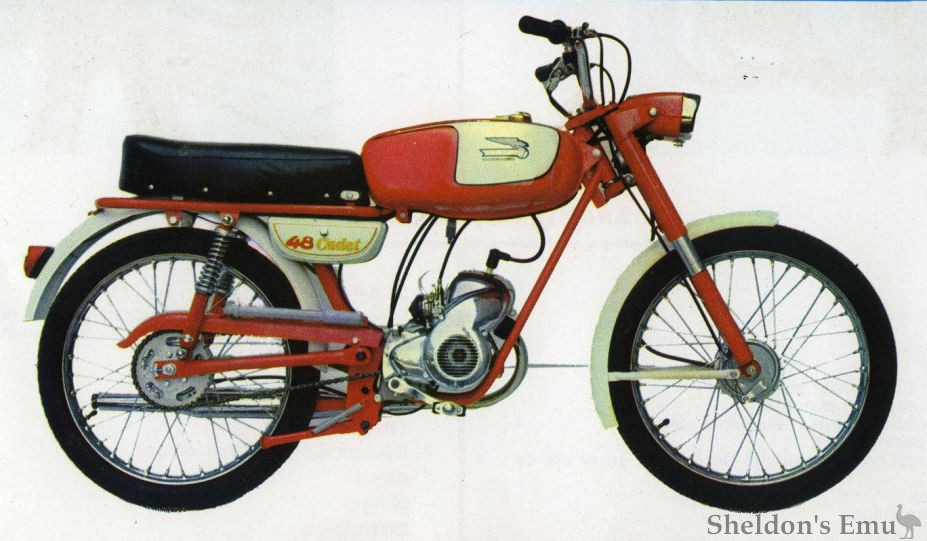

The first step towards commercializing mopeds from the Barcelona factory was in 1963. Previously, there were the Cucciolo models, independent of Mototrans, and that year two Italian models were imported and presented at the Barcelona Trade Fair. The models were quite different from each other: one was an open-frame moped with a touring aesthetic and functional pedals, the Piuma model, and the other was a moped with a very sporty finish, the 48 Sport model. Both had the same 48cc Ducati engine with three twist-grip gears, although the Sport model had a more inclined carburetor and reached a speed of 70 km/h. The law limiting mopeds to a maximum speed of 40 km/h forced the Sport model to be classified as a moped. The materials used to manufacture these engines were of the highest quality and used brands such as Borgo Tarabusi, Dell'Orto and Cip carburetors, telehydraulic suspensions and aesthetic details used in motorcycles: metallic paint, pinstriping finishes on the tank, etc.
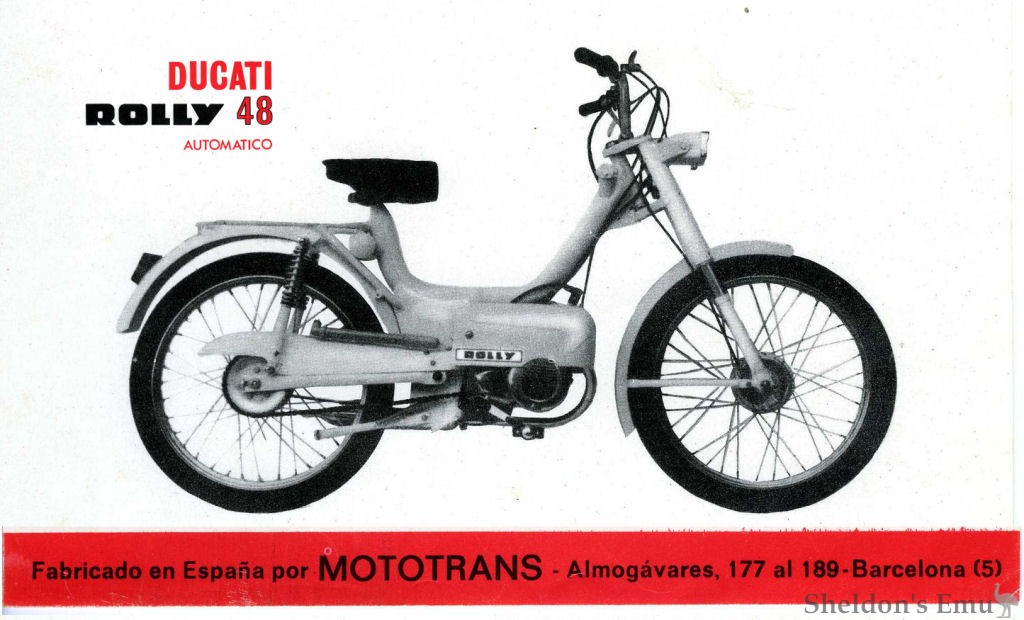
The success of these models, especially the Sport model, encouraged the factory to continue with this production line and introduced the Rolly model, similar to the Piuma but with an automatic transmission and a simpler design, including the fuel tank integrated into the frame (in the style of the Motobecane-Mobylette) and weighing 45 kg. The engine was the same as the previous models. Later, the Junior moped was introduced, a completely Spanish model, similar to the Rolly, but with a 48 cc turbine-cooled engine.
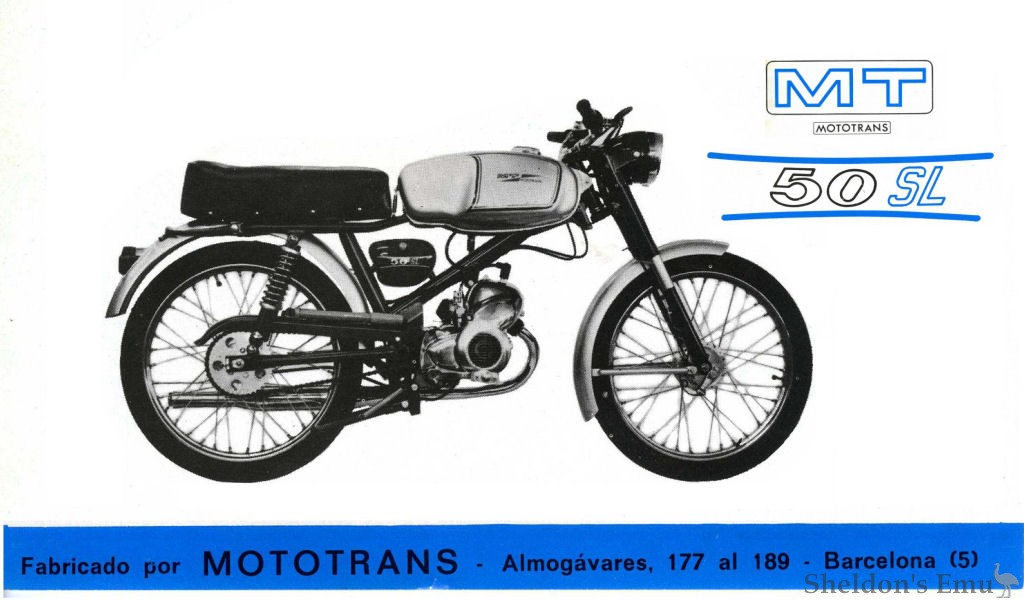
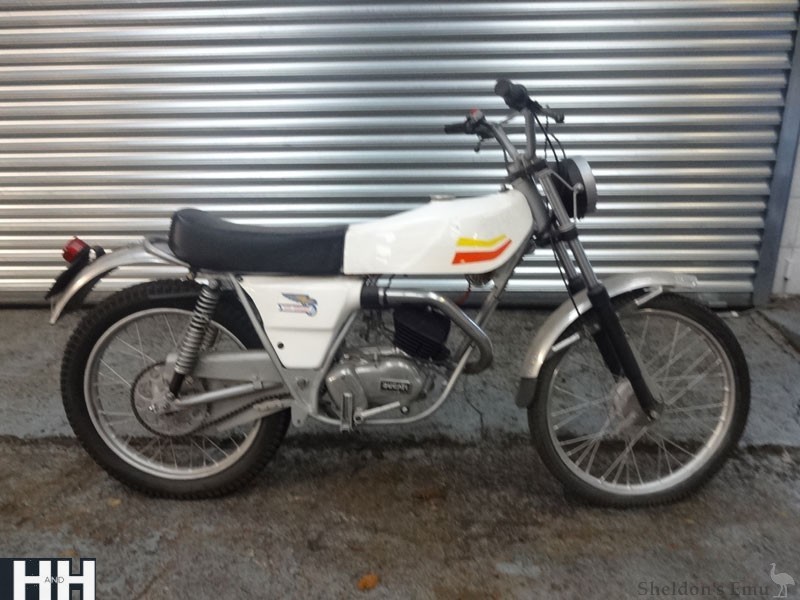
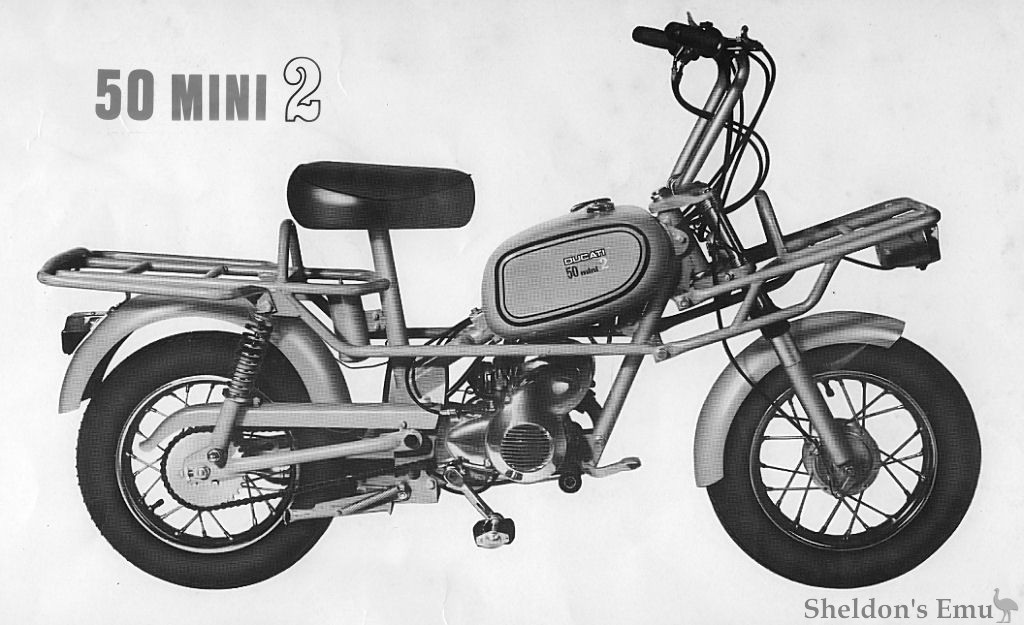
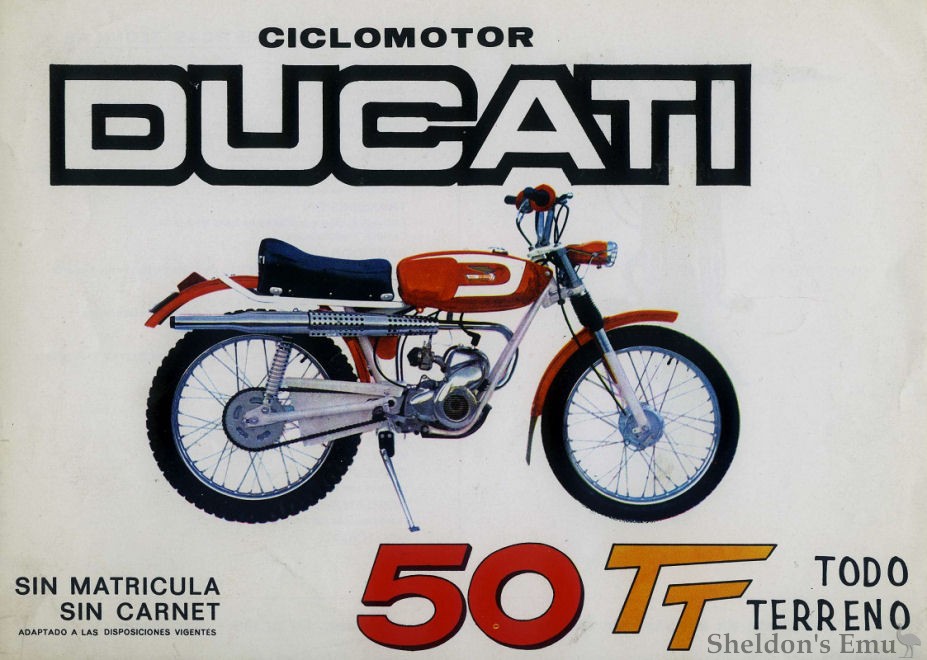
Ricardo Fargas, using leftover parts from the factory, designed Ducati's first all-terrain moped, the 50 TT, which gained a good reputation as a reliable moped. It initially featured the same three-speed Italian engine, and in its second, more widespread version, a forced-cooling engine. In 1969, two mopeds were manufactured under the MT name, equipped with a Ducati engine and a rather unattractive aesthetic compared to the Italian models. The Mini 2 moped was introduced in 1970, designed for transporting small packages thanks to its front and rear luggage racks. Its striking industrial yellow color made it hard to miss, and its 12-inch wheels kept it barely a foot off the ground. Previously, Mototrans had manufactured a mini-bike for a Valencia-based company (Dismave), the Mini Marcelino, powered by a 48cc Ducati engine with automatic transmission, intended to address traffic problems in large cities.
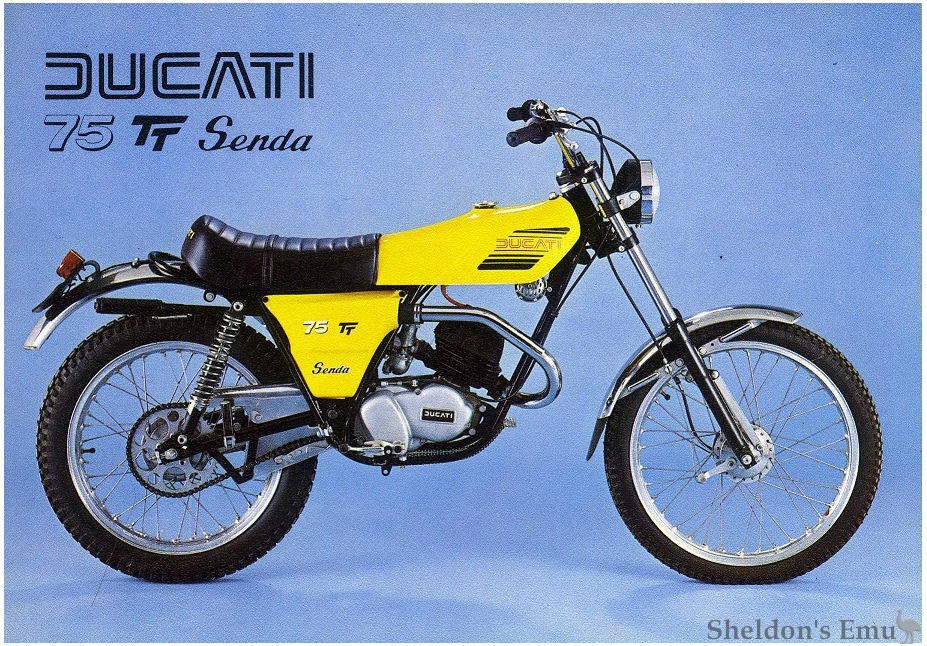
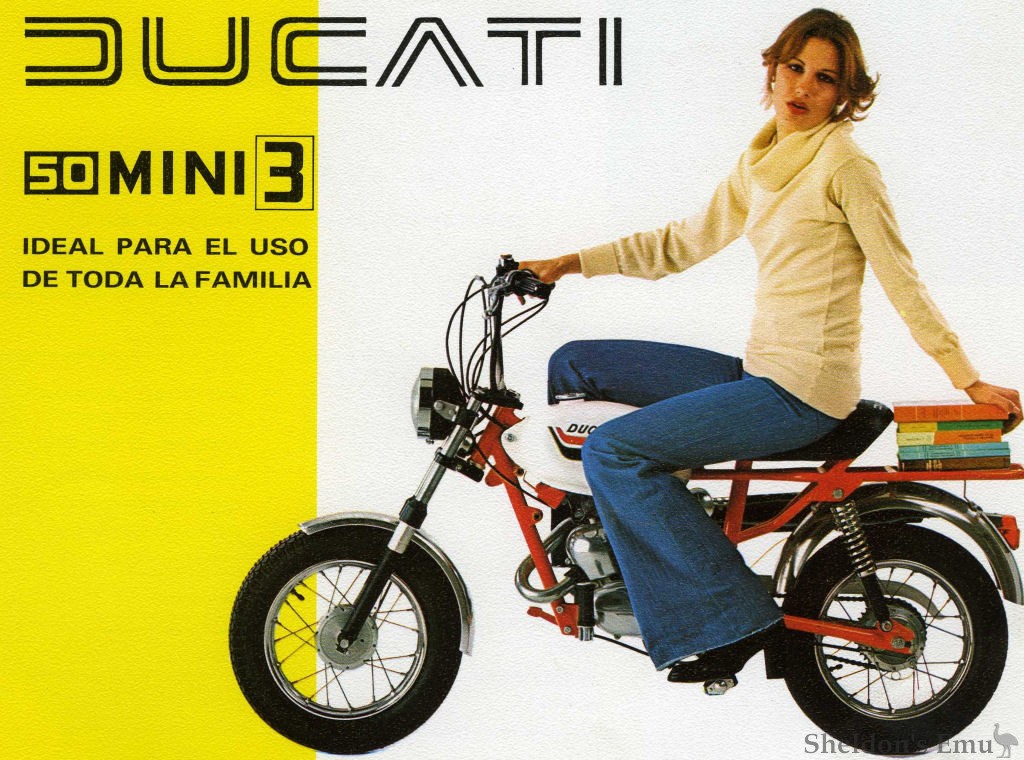
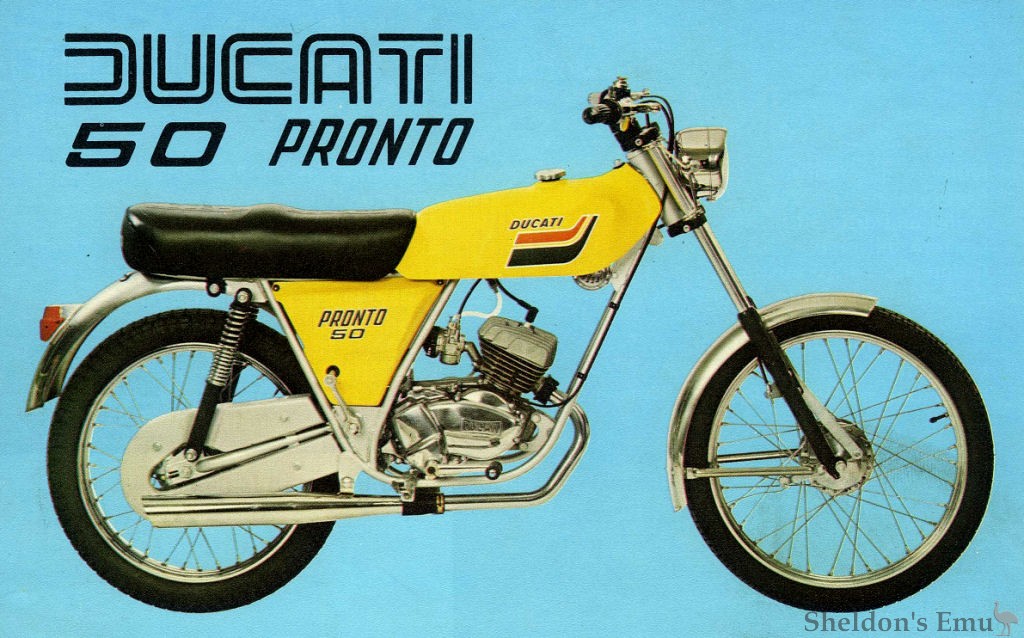
In 1972, Mototrans took its most significant step in moped manufacturing: the introduction of a 49.6cc, 4-speed engine. The first model produced with this engine was the 50 TS, a road-going model with a very attractive appearance and improvements in every aspect: new brakes, suspension, power, etc. The following year, the 50 TT "second generation" was introduced, an off-road version of the 50 TS, featuring raised fenders, off-road tires, a high-mounted exhaust, a different rear suspension, a new fuel tank, and a new seat. In 1975, the Pronto and Senda models were launched, a road and off-road model respectively, replacing the previous models. The improvements focused on the bikes' chassis, eliminating the flaws present in earlier versions. The Mini 3 model, the last with a 3-speed engine, was also manufactured that year.
A further evolution of these mopeds led to the manufacture of the Pronto model in 75cc and 100cc versions and a 75cc Senda model. The last moped with a Ducati engine was the Cross 50, which was presented at the Barcelona Motor Show in 1977.
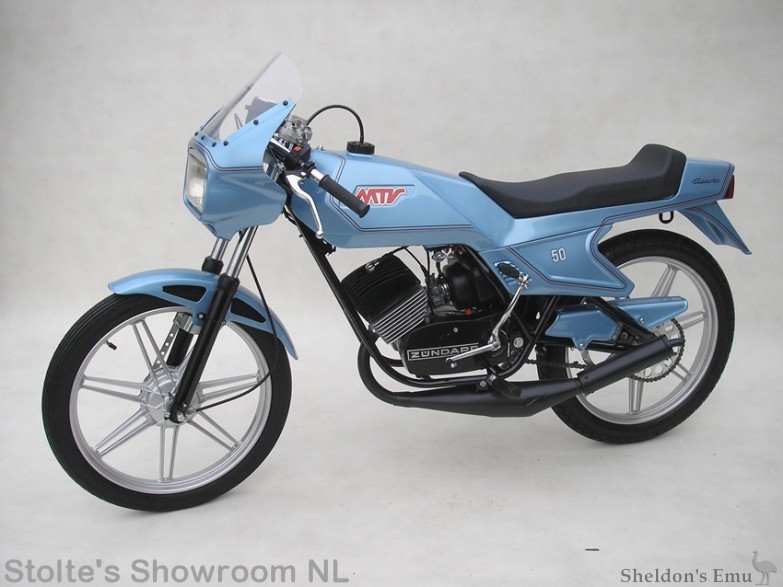
In 1980, amidst a major restructuring of the Spanish automotive industry, Mototrans, under the MTV brand, manufactured two mopeds with German Zündapp engines: the Cross and the Sport. These mopeds were quite attractive, featuring fiberglass for the tank, side panels, and other components, and the engine was truly up to the task.
Other Spanish brands, such as Bultaco and Ossa, bought engines from Mototrans for use in their mopeds. Bultaco fitted the Ducati engine to its Bultaco 49 and Chispa models, and Ossa did so in some of its 50cc versions.
Technical characteristics of moped engines:
3-speed engine: Single-cylinder, two-stroke; cylinder axis inclined 25° forward from the vertical. Bore x stroke: 38 mm x 42 mm. Displacement: 47.6 cc. Compression ratio: 8:1 for Piuma and 48 TS; 9.5:1 for 48 Sport. Effective power: 1.8 hp for Piuma at 5800 rpm, 2.5 hp for 48 TS at 6000 rpm, and 4.2 hp for 48 Sport at 9600 rpm. Dell'Orto T4 carburetor for Piuma and TS, Dell'Orto UA-15 S carburetor for the 48 Sport.
4-speed engine: Single-cylinder, two-stroke; Bore x stroke 38 mm x 43 mm. Displacement 48.6 cc. Compression ratio: 10.5:1. Effective power 2 HP at 5200 rpm. Dell'Orto SHA 12/12 carburettor.
Source: perso.wanadoo.es (archive)